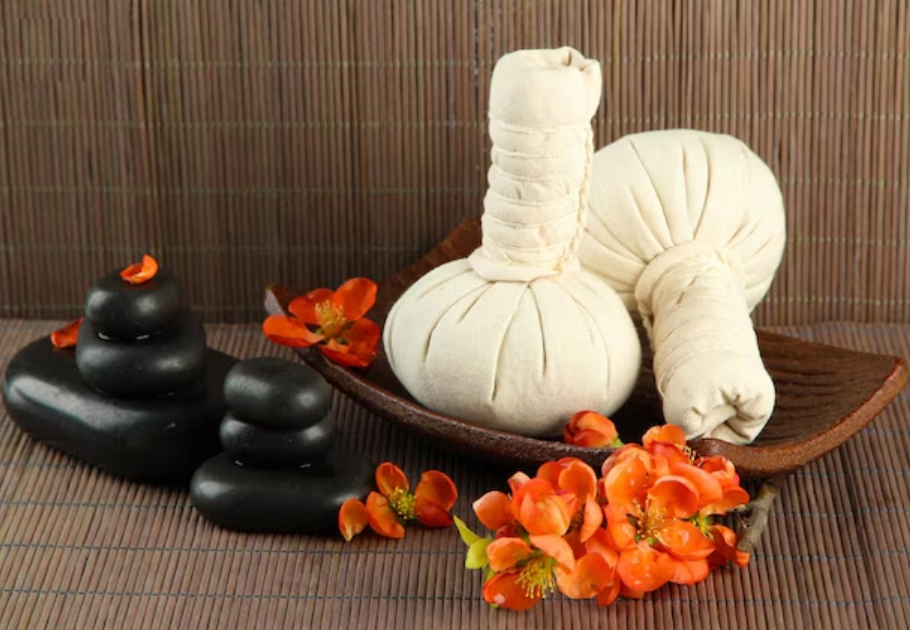
If you untie a Thai herbal compress, or luk pra kob, you will not find one fixed formula inside. Every region, family and spa has its own version. Even so, a handful of herbs appear again and again, and each adds something different to the warmth and fragrance of the compress.
Plai
Plai, also called cassumunar ginger, is a close relative of ginger and is often seen as the heart of the compress. Studies on luk pra kob list it as a main ingredient, and traditional Thai practice has long used it to soothe sore muscles and aching joints.
Turmeric
Turmeric brings a warm, earthy aroma and its well-known golden colour, which often stains the cloth after use. It is valued in many traditional medicine systems, including Ayurveda, and is the second of the three core herbs named in research on the compress.
Camphor
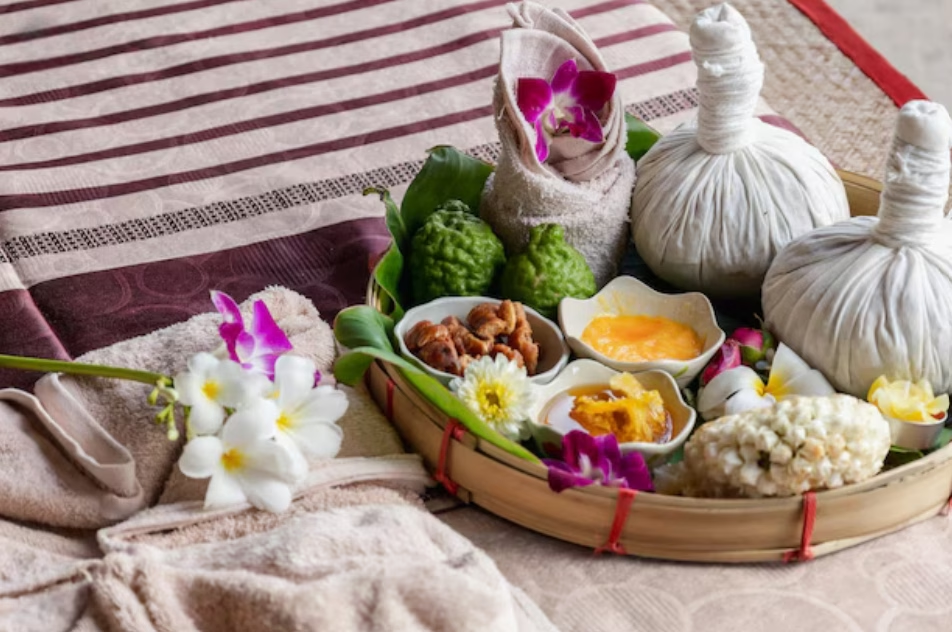
Camphor crystals add a sharp, cooling note that cuts through the earthier herbs. Together with plai and turmeric, camphor completes the trio that research identifies as the main ingredients.
Lemongrass
Lemongrass adds a clean, citrusy freshness. It is one of the most common additions to Thai compresses and herbal steam blends, and a big reason a freshly steamed compress smells so inviting.
Kaffir lime
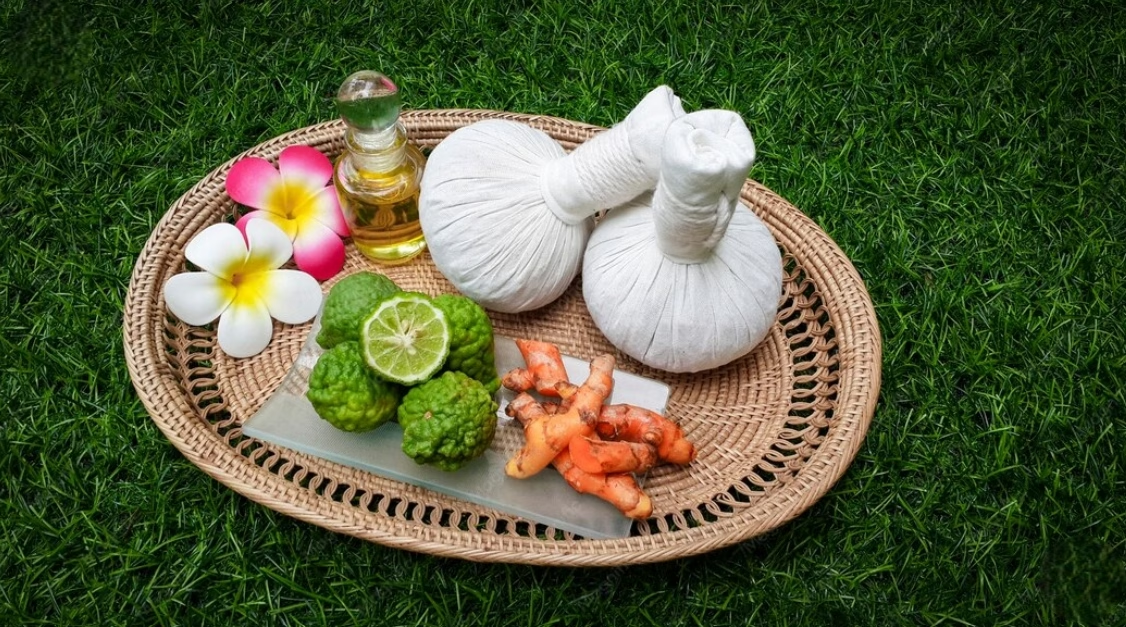
Kaffir lime peel brings a bright, uplifting citrus note. Citrus peel is part of many compress recipes and balances the deeper aromas of turmeric and plai.
Other common additions
- Tamarind leaves feature in many traditional recipes.
- Salt is sometimes added to the blend.
- Som poi, a traditional Thai herb, appears in some mixes.
How the herbs work together
Before use, the bundle is steamed until it is hot and fragrant. The steam warms the herbs and releases their natural oils, so every press of the compress delivers warmth and scent at the same time. If you are allergic to any plants or herbs, let your therapist know before your session.
Want to know how the compress is made and used? Read Q&A: What is a Thai herbal compress made of? or browse our full massage menu on the Pricing page.